Benny Blanco on Self-Doubt: Why Starting Before You’re Ready Is the Secret to Success
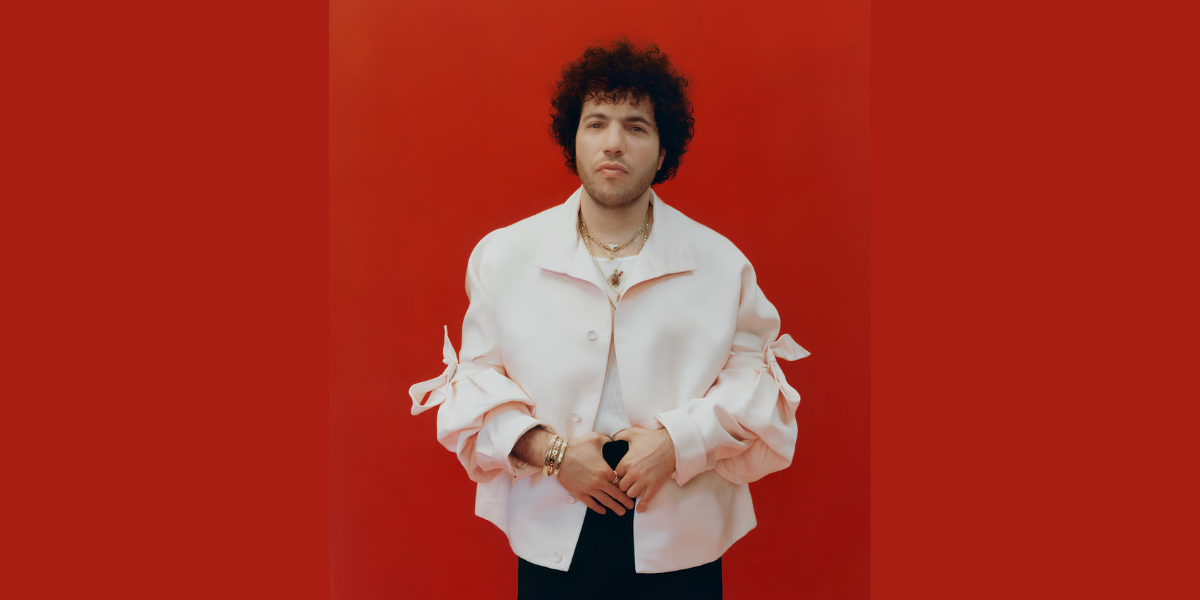
Most aspiring entrepreneurs assume successful people eventually stop doubting themselves.
Benny Blanco offers a much more useful version of success: the doubt might never disappear. You simply learn to move while it’s there.
In an appearance on The Mel Robbins Podcast, the Grammy-nominated songwriter, producer, and artist opened up about the less glamorous machinery behind his career: cold calls that went nowhere, ideas people rejected, projects that nearly collapsed, fear that still follows him, and an enduring sense of imposter syndrome.
His career may include songs associated with artists including Ed Sheeran, Justin Bieber, Rihanna, Katy Perry, Maroon 5, and others. But the entrepreneurial lesson behind those accomplishments isn't that Blanco possessed some superhuman confidence.
It's that he kept starting.
And for wantrepreneurs waiting for confidence, connections, permission, or perfect conditions, that distinction matters.
Success Starts With Moving the Idea Forward
Blanco grew up in Virginia without famous parents, significant industry connections, or an obvious entry point into the music business.
So he created one.
His central advice is almost absurdly simple: take whatever idea exists in your head and move it forward today—even if it's only by a few inches.
“It’s just about starting now. Start today.”
That philosophy directly attacks one of the easiest traps for aspiring founders: preparation disguised as progress.
You need a better website before launching. More market research before approaching customers. A new camera before publishing content. Another course before offering your service.
Preparation can be valuable. But eventually, preparation becomes a socially acceptable way of avoiding the possibility of embarrassment.
Blanco argues that underneath many of those excuses is fear: What if nobody watches? What if people laugh? What if you're rejected? What if you discover you're not good enough yet?
His answer isn't that those outcomes won't happen.
It's that they're survivable.
Develop “Failure Amnesia”
One of Blanco's most memorable ideas is what he calls “failure amnesia.”
He explained that a friend once noticed something unusual about him: Blanco could enthusiastically champion an idea, watch it fail, and seemingly wake up the next day ready to keep moving.
The failure happened. He simply refused to make it his identity.
That's an important distinction for entrepreneurs.
A failed launch doesn't automatically make you a failed entrepreneur. A prospect saying no doesn't determine whether the next prospect will say yes. A video getting 37 views doesn't predict the performance of your next 100 videos.
As Blanco put it:
“If you forget about the failure, I feel like everyone else is going to forget about it.”
Failure amnesia isn't refusing to learn. Later in the conversation, Blanco makes the opposite argument: a failure remains a failure when you don't learn from it.
The entrepreneurial formula becomes:
Try → fail → learn → adjust → try again.
What you don't need to add is months of self-punishment between steps three and four.
Before the Hits, Benny Blanco Just Tried to Get in the Room
Blanco's early career is perhaps the clearest demonstration of this mindset.
Without connections, he had his mother take him to recording studios when he was young. He would wait outside and ask people leaving whether they made music and whether there was anything he could do.
Later, he used computers at his school library to reach people through Myspace.
He cold-called record companies. He developed relationships with interns and assistants. Some of those relationships endured as people's careers grew.
His objective wasn't sophisticated.
Get in the room.
“If you show up and you're in the room, something's going to go down,” Blanco explained. Maybe you learn something. Maybe an opportunity emerges. Either way, you've increased your surface area for luck.
Founders can apply the same principle.
Your “room” might be a networking event, a LinkedIn conversation, a sales call, a local business meetup, a niche online community, or an email to someone you admire.
You cannot control what happens once you enter.
You can control whether you show up.
The Story Behind “Eastside” Shows What Persistence Really Looks Like
Blanco's story about releasing “Eastside” is particularly instructive because it dismantles the polished version of success we usually see from the outside.
After years as a successful producer and songwriter, Blanco found himself struggling to get the work he wanted. Success hadn't eliminated friction.
Instead of waiting for the industry to change, he decided to change his role within it.
He wanted to release music as an artist himself.
What followed was hardly a clean launch.
The song went through potential collaborators, recording complications, business disagreements, delays, and repeated moments when the entire project could have died. At one stage, Blanco described making one more phone call when others believed they had exhausted their options.
Eventually, the deal came together.
Then the song came out—and didn't immediately explode.
It climbed.
And climbed.
Blanco described “Eastside” as making an extraordinarily long journey from the bottom to the top of radio.
Listeners saw the successful song.
They didn't see the months of conversations, uncertainty, stalled negotiations, rejection, and self-doubt behind it.
That's entrepreneurship in miniature.
The market sees the launch. The founder experiences the thousand tiny decisions required to reach it.
Success Doesn't Make Self-Doubt Disappear
Perhaps the most surprising part of Blanco's conversation with Robbins comes after all those accomplishments.
He says he still experiences imposter syndrome.
He even felt it walking into the interview.
That should change how early-stage entrepreneurs think about confidence.
If your plan is to wait until you finally feel like you belong, you may be waiting forever.
The goal isn't necessarily to eliminate fear.
Blanco's experience with flying makes that point particularly clear. After developing a significant fear of flying, he spent years finding alternatives—including traveling by boat. When he eventually boarded a plane again, he wasn't magically fearless.
He was scared.
And he did it anyway.
That's a much more achievable definition of courage for an entrepreneur.
You don't need to feel fearless before making the sales call.
You make the call while nervous.
Redefine What Counts as Winning
Blanco also offers a useful test for dealing with outcomes you can't control:
What else could you have done?
If he genuinely gave something everything he could, he can accept the result—even when the technical outcome looks like failure.
Then he examines what happened and learns from it.
This separates effort and learning, which founders can control, from outcomes, which they can't completely control.
You can build a great product and mistime the market.
You can deliver an excellent pitch and lose the deal.
You can produce your best work and watch someone else win.
Your responsibility isn't to control reality.
It's to maximize your effort, extract the lesson, and decide what to do next.
Your Next Step Doesn't Need to Be Big
Near the end of the conversation, Blanco gives listeners an exercise that could double as a startup operating system.
Write down the things you want to do.
Choose one.
List the first things required to move it forward.
Then do something today that advances it—even by a centimeter.
Not Monday.
Not when you're confident.
Not after someone validates the idea.
Today.
Because the biggest lesson from Benny Blanco's career isn't really about music.
It's about momentum.
You don't need extraordinary confidence to begin. You don't need every connection. And you don't need proof that everything will work.
You need enough courage to move the idea a few inches.
Then tomorrow, you move it again.
For the wantrepreneur waiting to become an entrepreneur, that tiny distinction might be everything.
Alexandr Wang on Building Meta’s Muse: 7 Lessons Every Entrepreneur Can Learn About AI, Leadership, and Growth