The Art of Resilience: Cassandra Kiger’s Blueprint for Sustainable Success
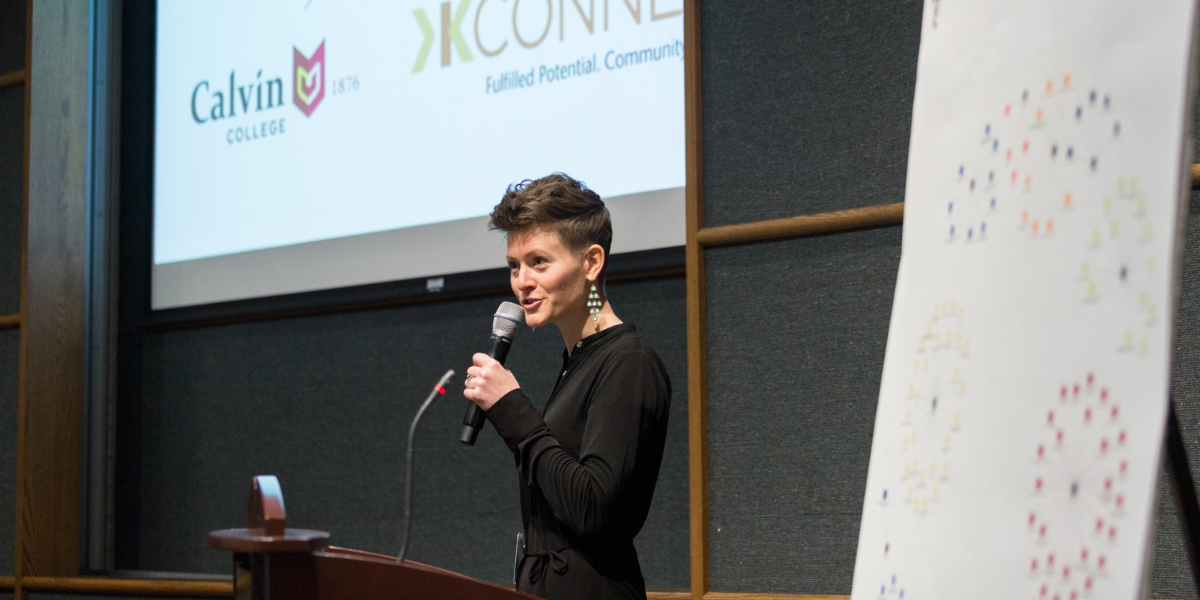
Cassandra Kiger's journey from wantrepreneur to entrepreneur is a testament to resilience and innovation. As CEO of Consulting for Resilience, she champions adaptable systems that thrive amid change, leveraging her expertise in change management and equity-centered design. In this Wantrepreneur to Entrepreneur Spotlight, Cassandra reveals how her entrepreneurial roots, cultivated through childhood ventures, evolved into a mission-driven career. Her story is a powerful reminder that true success is built on adaptability, strategic empathy, and a commitment to fostering environments where both people and systems flourish. Dive into Cassandra’s transformative journey and be inspired to build resiliently.
Hi, Cassandra! Thanks for joining us today. Tell us about your business. Who do you serve, how do you serve them, and what's the impact that your business and work makes?
Consulting for Resilience (CFR) partners with organizations and communities to build sustainable, adaptable systems that thrive through change. CFR weaves together Asset-Based Development, Change Management, and Universal Design principles to create solutions that are flexible, equitable, and resilient by design—not as an afterthought.
Cassandra Kiger (she/her), CEO of Consulting for Resilience, brings together deep expertise in change management, cross-cultural communication, and equity-centered design.
Grounded in asset-based development—the belief that every group and community already possesses the knowledge, resources, and tools needed to achieve their goals—her approach weaves together practical organizational strategy with a commitment to justice and accessibility.
With bilingual capacity in English and Spanish and over a decade of experience bridging cultural, linguistic, and organizational divides, she builds resilient systems that work for everyone, with a focus on three key services:
Universal Design Implementation
Build for the furthest outlier, and everyone else thrives within it. Universal Design creates systems flexible enough to accommodate diverse needs—from neurodivergent processes to varied learning styles to physical accessibility. Change is the only guarantee. By grounding our work in Universal Design principles and data-driven decisions, organizations and communities prepare everyone to engage and thrive in the future they’re building—no matter what that future brings.
Recommended for:
✓ Planning projects for diverse groups
✓ Supervising and supporting diverse staff
✓ Building programs with the ability to pivot
✓ Ensuring accessibility to products and services
Change Management
Plans don’t execute themselves—people do. Effective change management integrates human processes into planning and strategy from the start. When people tasked with execution help create the plan, they understand it, envision it, and succeed in bringing it to life. Leadership teams and boards receive targeted support to ensure organizational buy-in at every level. A written plan without buy-in remains pretty but irrelevant on paper.
Recommended for:
✓ Rolling out large-scale changes to groups
✓ Effectively leading through highly emotional circumstances
✓ Identifying on-the-ground leaders to foster collaboration
✓ Getting buy-in and real time feedback through change
Strategic Planning
Long-term success lives at the intersection of what is just, enforceable, constructive, and achievable. Services include comprehensive evaluations and planning support for executive teams navigating complex organizational transitions. Working with executive teams, nonprofit boards, government agencies, and educational institutions, we help define the north star today to build the future strategically. Without clarity of direction, organizations waste resources, confuse staff and clients, and drift from their mission.
Recommended for:
✓ Identifying agreed-upon, long-term goals
✓ Refining and aligning mission and vision
✓ Reducing mission-drift and creating healthy boundaries
✓ Breaking the mission into key action steps and goals
✓ Aligning individual action-steps with goals
Tell us about the moment you finally felt like you went from wantrepreneur to entrepreneur.
Throughout my entire career I have nailed the “diversified income” checkbox, having as many side-hustles as I could fit into the week to make the budget work. It has allowed me to invest in myself professionally, and ensured that when one option ended, I had others to fall back on. Until this past year, that is.
The year 2025 was not the first time I’ve lost a job to political and congressional funding changes, by any means, but it was the first time that I looked at the budget, realized what new political changes would mean for my role, and I didn’t have a backup plan. I have three college degrees and an enormous range of experience, and I had no idea how I was going to use any of that to pay the bills and contribute to my community when it needs it the most. I was caught on my heels and realized I needed to make a change.
I have spent well over a decade professionally working to build people, programs, systems, and organizations that are resilient. I have worked in refugee resettlement, foster care, child abuse prevention and healing, mentoring, workforce development, local government, and every field I have ever worked in has started from the basis of saying, “this person or community or group has taken an awful hit; now what do we do”? How do we take something awful and build resiliently from the ashes? How do we reteach our brains, our bodies, our organizations, and our communities that something ending or changing, even tragically, does not mean it is the end?
I spent a career working with this consistent goal in mind, and yet I was not prepared to respond resiliently myself. Therefore, I decided to take my own good advice and remember to build resiliently. I filed for my LLC and bought my domain in the summer of 2025 before my job was eliminated and began earnestly building out my business plan and materials as soon as the organizational restructure was complete.
Describe the moment or period in your life/career that motivated you to make the entrepreneurial leap.
I don't think I ever had a choice in entrepreneurship. I was born and bred an entrepreneur in an entrepreneurial household. My dad’s first LLC is named after my older brother’s initials, placing just two of his biggest creations in an even smaller Venn diagram some 40+ years ago. As for myself, my first business transactions took place when I was in charge of the farm’s chicken coop and began selling free-range eggs for 50 cents a dozen (inflation, am I right?!). I was a hustler from the start. When my grandmother very kindly asked if she might get a discount on her dozen eggs, I drove her a hard bargain at 50% off, but only if she paid up front in cash. I was four years old.
By the time I turned eleven I had a semi-official loan taken out through my dad’s bank account (banks, very reasonably, won’t loan to 11-year-olds) and bought two vending machines that I ran in the warehouse of his business. I would spend the next five years begging rides and checkbook signatures off of my parents so that I could go to Sam’s Club and use every ounce of my body weight to haul around dollies with cases of pop and snacks towering taller than I was. I would spend weekends packing and fixing machines and counting quarters like a tiny gangster. This business was my first opportunity to play with growth and expansion, and I spent summer days walking around to the 100+ employees and getting their survey feedback on what items they would like to see in the machines and how I could improve services. I partnered with the HR team when they had company-wide weight loss and steps challenges to give healthier food options, and I began cleaning the microwave and kitchen areas so that my microwaveable soups sold better in the winter months when the warehouse was cold. One of my biggest growth investments early on was the acquisition of an automatic change counter that counted and rolled my hard-earned quarters, dimes, and nickels into little rolls that I could deposit into my account and pay off my loan with. When I was nearly 16, I sold the business for a profit to another employee at the warehouse and put the money towards my car fund.
Consulting for Resilience may be my first official LLC, but this is certainly not my first rodeo.
Describe a tool, service, or software that has been a game-changer for your business. How does it contribute to your success?
Change Management is one of the most fundamental and universal tools that I use in my work. Change Management is the gorgeous, data-driven juxtaposition of human psychology and Agile business practices. It is founded in the recognition that plans don't execute themselves-people do. Therefore, every plan must include clear steps and replicable tools to support the people behind the plan in ensuring that they are supported, treated with empathy, have the resources they need in the format they need them, and understand their role in the greater project. I believe every leader should know and understand the basic principles of change management.
I was able to talk about a specific case study in my interview with Brian on the W2E podcast where I helped a team improve their data collection and reporting to sustain millions of dollars of funding through a combination of Change Management tools, Agile business tools, and Legos! You can also review the business case study for that project here: (https://consultingforresilience.com/2026/02/25/data-solutions-and-alignment-for-a-relationship-driven-team/)
We know that success is very often a non-linear path. Tell us about a failure, pivot point, or lesson that changed your course or direction and helped to get you where you are today.
Nearly a decade ago I thought I got my dream job. It was in an area that I was growing my expertise in, at a respected company that gave me enormous room to learn and grow, and I received my biggest paycheck to date. I confidently quit my job at the time and began as soon as they would let me alongside another newly hired counterpart.
Within four weeks my new teammate had left, and I only lasted two more weeks. After resigning I discovered that we were not the first, nor second, nor third individuals to quick this exact position in less than 2 years. Everything about the position was excellent, but the supervisor was terrifying. He focused exclusively on short-term, flashy results, micromanaged our every move, hovered over desks as people completed tasks, determined who we could and could not speak with in the office, and was not openly to alternative ideas or opinions. He was so awful to be around that I was more willing to spend the next eight months working part time and job hunting than be around him for another day.
Awful job experiences can teach us as much as excellent ones, and that experience was a key reason that I learned the importance of caring first and foremost for team members and their needs, and the need to create a joyful, creative, innovative work environment. When I was hired as the Executive Director of a nonprofit that focused on mentoring in schools in May of 2020, I had no idea how much I was going to need those lessons. Obviously, that was not an excellent time to work in the nonprofit world, or the school world, or the fundraising world, (or really any world). However, I took the terrible lessons I had learned from him and used them to recreate the exact opposite environment where I cared for my staff members and their families as my first priority, where I encouraged and modeled creativity and innovation and laughter, and where I developed laser focus on the long-term goals and outcomes before determining how best we would achieve them. What resulted was quite honestly the best work I have ever done and the most joyful workplace I have ever worked in, despite what was happening around us. (Learn more at: https://consultingforresilience.com/2026/02/25/sustainable-funding-and-service-delivery-solutions-through-a-pandemic/)
What unconventional strategy did you employ that significantly impacted your business?
When I became the Executive Director in May of 2020 of a nonprofit agency that facilitated in-school mentoring, I had a bit of a challenge on my hands. The agency was transitioning away from its primary funding source, we could not enter schools for an undetermined amount of time, and we could not hold any of our primary fundraisers in person. With a whole mess of issues to solve quickly, one of the very first things that I did was in state with funding that helped take care of the staff. We got Employee Assistance Program benefits that offered free therapy, financial counseling, medical navigation, and more for every staff member. Every staff member could use paid work time to attend up to one hour of therapy a week. No staff member needed to use their PTO to take themselves or their family members to medical or therapeutic appointments. Parents with school-age children were able to modify their work hours so that they could provide in-home schooling to their children first and work after. Staff were encouraged to use paid time to go to vote in all elections and receive any vaccines available. Each staff member received a Professional Development stipend. And, as the Executive Director, I demonstrated my seriousness by actively participating in all of these things myself, openly choosing to put appointments on my calendar for staff to see and following through on using our benefits.
What unfolded over the next two years was some of the most creative, innovative, insane magic I have ever seen. They built, funded, resourced, and facilitated over a year of online, virtual mentoring for hundreds of students and families. We held record-breaking fundraisers entirely from our living rooms. We expanded to new schools and hired more staff. We increased donors, gained new funders, and qualified for monies never previously available to us. It was astonishing.
All of this was possible only because staff knew, without a doubt, I had their back first. They gave 110% every day because they had the tools, resources, and personal and family safety to give back to the organization, after the organization gave to them first. People execute plans, so you have to care for people first.
https://consultingforresilience.com/2026/06/11/thehiddennecessityofpoliciesineffectiveleadership/
What’s something you wish you knew sooner that you’d give as advice for aspiring or newer entrepreneurs?
There is a point in your entrepreneurial journey where you have to make the decision: am I ready to launch?
Obviously, entrepreneurship is not for the faint of heart and takes an incredible amount of startup work, time, and resources. You need to know if your plans are realistic, how you will pay for things before you're making a profit, what systems and tools you will use to run your business, how you will market and communicate your products and services, and so much more.
However, there is a specific moment where you answered 85% of the questions above, and you have an imperfect but still awesome something to show for it, and you have to actually decide to go for it. You have to show off your product, tell people about your services, even though you're missing the last 15% of your answers. And in that moment, I want to tell every wantrepreneur to go for it. Publish the post, share the website, have folks test your product, tell people about your services. You know you don't have all the answers, but the only way for you to get the remaining answers you need is to do it in real time.
The first time I told a professional coach of mine that I had officially launched Consulting for Resilience, they laughed! They told me, "You're never going to believe this, but would you like to co-host a retreat with me? You're exactly what I needed." If I hadn't been brave enough to share my incomplete product, I never would have signed my first paid contract. You can make changes even after you launch, but at some point, you can't make any more improvement until you launch. Go for it.
Give yourself time and space to plan, and then toss it out there. even if you don't know what's happening next
Want to dive deeper into Cassandra's work? Check out the links below!
- Visit Consulting for Resilience's website: consultingforresilience.com/
- Connect with Cassandra Kiger on LinkedIn: Cassandra Kiger, MSW, LLM
- Follow Consulting for Resilience on LinkedIn: Consulting for Resilience
Alexandr Wang on Building Meta’s Muse: 7 Lessons Every Entrepreneur Can Learn About AI, Leadership, and Growth